

Educational
Cannabis Terpenes Explained: Aroma, Trichomes and Effects
Nov
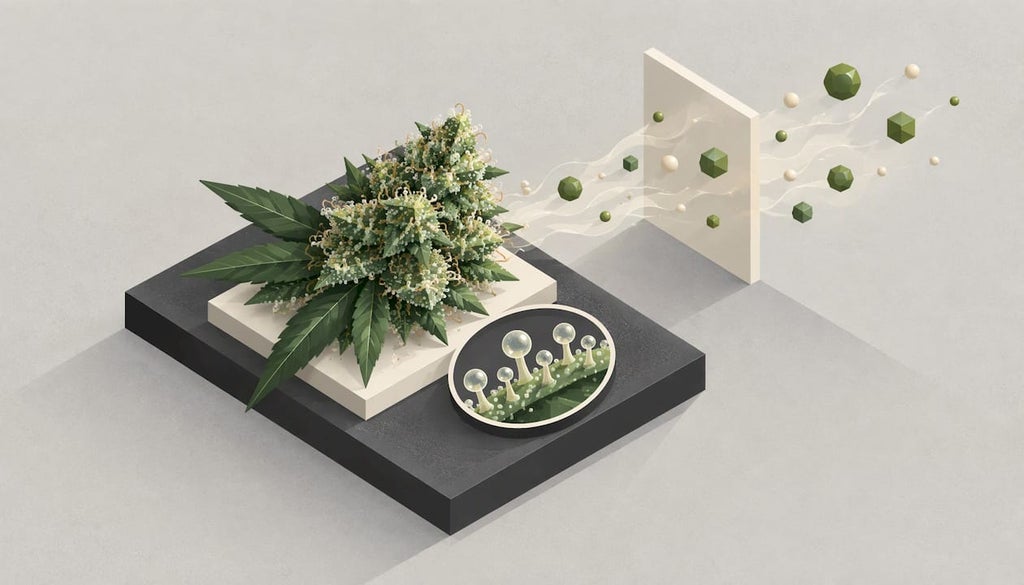
Terpenes are the aromatic compounds that make one cannabis flower smell of citrus and another of pine or pepper. They are made in the sticky resin glands (trichomes) that coat the buds. They clearly shape aroma and flavor. Whether they change how a high feels is still an open scientific question. This guide covers what terpenes are, where they sit on the flower, which ones you will meet most often, and how to read them without over-promising yourself an effect.
TL;DR
- Terpenes are natural aromatic compounds, found in many plants, that give cannabis its smell and taste. Over 100 have been identified in cannabis.
- They are produced in trichomes, the frosty resin glands on the buds. Trichomes also hold cannabinoids such as THCA and CBDA.
- Six names cover most of what you will see: myrcene, limonene, alpha-pinene, linalool, beta-caryophyllene and humulene.
- Terpenes may influence how cannabinoids feel (the “entourage effect”), but this is not proven in humans. Use terpene data to choose aroma and flavor first.
- Total terpene percentage does not reliably predict how strong a flower smells, so trust your nose as well as the label.
Table of Contents
- What terpenes are, and why cannabis has so many
- Trichomes: where the terpenes are made
- The terpenes you will meet most often
- What terpenes do to your high: what the evidence supports
- Reading aroma without fooling yourself
- How to use terpene information when you shop
- Our perspective
- Find your profile at The Chrono
- FAQ
- Sources
What terpenes are, and why cannabis has so many
Terpenes are naturally occurring organic compounds. Lavender, citrus peel, hops, pine needles and black pepper all owe their scent to them, and cannabis is no different. According to Cannabis Evidence, they are responsible for the aromas and flavors of cannabis and may influence the intoxicating effects of cannabinoids in whole-plant products.
The count depends on who you ask and how they measure. A 2020 review of cannabis terpenes reports more than 200 volatile compounds across cannabis genotypes, including 58 characterized monoterpenes and 38 sesquiterpenes. A 2021 Frontiers in Plant Science review puts the figure at over 120 terpenes and explains the two broad families: monoterpenes and sesquiterpenes, which differ in their carbon skeletons.
A practical way to think about it: monoterpenes are lighter and more volatile, so they tend to be the bright, quickly noticed top notes when you open a jar. Sesquiterpenes are heavier and tend to read as deeper, warmer, spicier notes. That is a simplification, but it explains why a flower can smell sharp when you first crack the jar and mellow as you grind it.
Terpenes are not unique to cannabis, and they are not the same thing as cannabinoids. THC and CBD are cannabinoids. Terpenes are a separate class of molecules that sit alongside them in the resin.
Trichomes: where the terpenes are made
If you have looked closely at a bud and seen a glittering frost, you were looking at trichomes. They are sticky, translucent glands that cover the buds and, in much smaller amounts, the leaves and stems. Inside them are resin glands that produce terpenes, as Frontiers in Plant Science describes.
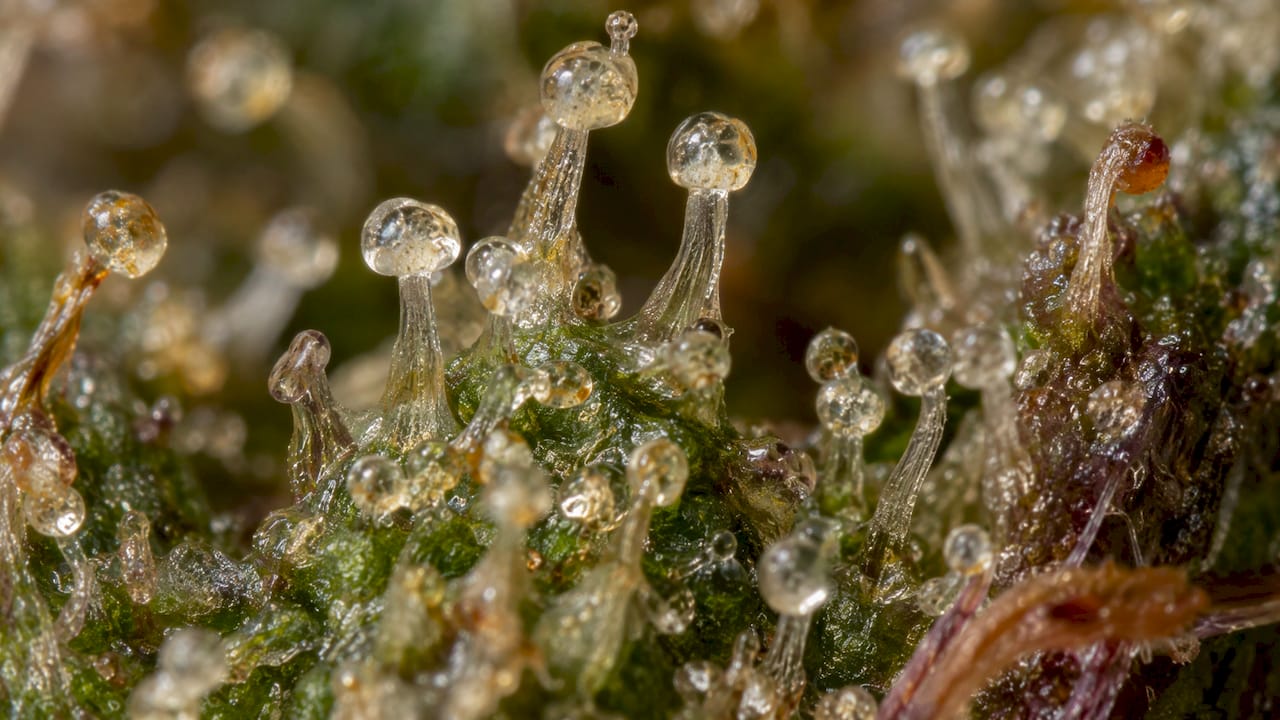
The same review notes where they concentrate: stalked glandular trichomes sit mainly on the calyces and bracts, with populations extending to the sugar leaves around the flower. These are the sites where THCA, CBDA, terpenes and flavonoids accumulate. A 2020 review by Roell adds that the resin of female flowers comes from these glands and is rich in both cannabinoids and terpenes, and that fragrance and flavor are affected by terpene composition.
Not all trichomes are the same
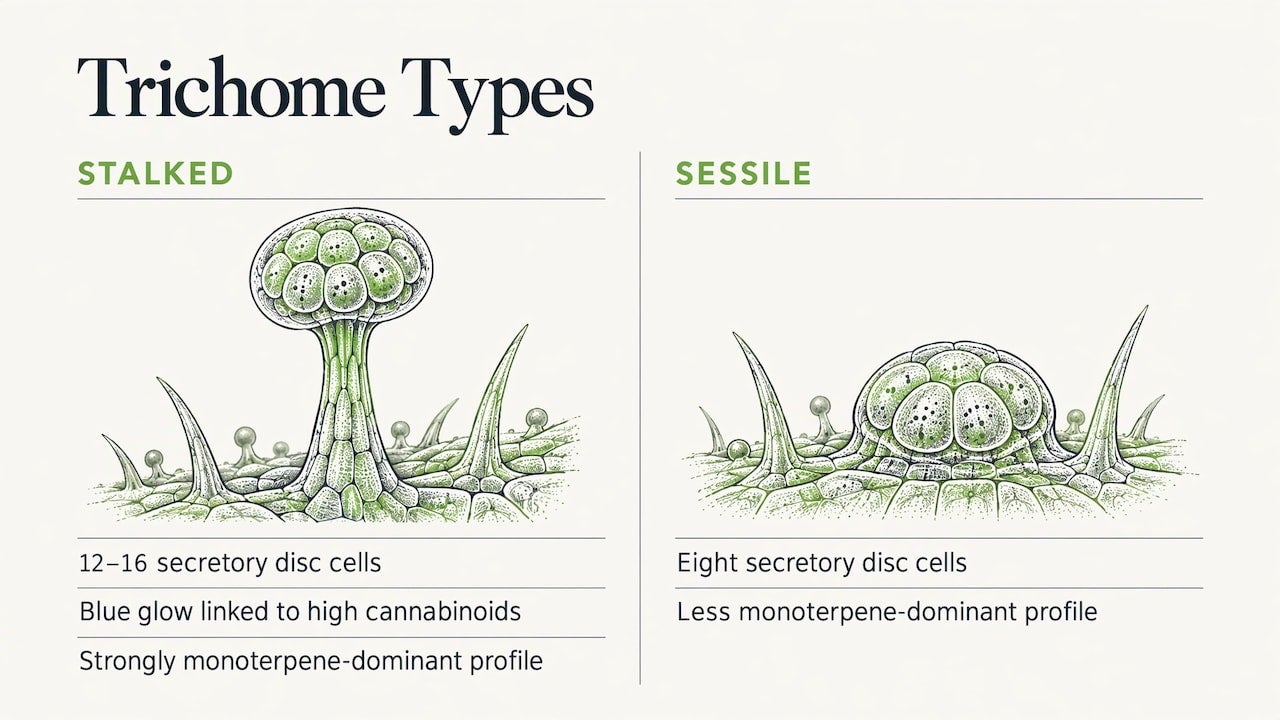
Researchers distinguish trichome types. A 2019 study in The Plant Journal found that stalked glandular trichomes have 12 to 16 secretory disc cells, show blue autofluorescence linked to high cannabinoid levels, and have strongly monoterpene-dominant terpene profiles. Sessile trichomes have eight secretory disc cells and less monoterpene-dominant profiles.
For a shopper, the takeaway is simple. Trichome coverage is a sign of where the aromatic resin lives, which is why careful handling matters: rough handling, heat and air all work against the delicate, volatile compounds on the surface. Look for flower that is stored in sealed, odor-tight packaging and that still smells vivid when opened.
The terpenes you will meet most often
Nearly every flower listing or lab sheet circles back to the same handful of names. A 2025 review of aroma and flavor diversity in Cannabis sativa summarizes the common ones and the associations attached to them. Foliar profiling of eight cultivars found 48 different terpenes, yet myrcene, alpha-pinene, limonene, beta-caryophyllene and alpha-humulene appeared in all of them, which is why those names dominate.
| Terpene | Typical aroma | Commonly associated with (research is early) |
|---|---|---|
| Myrcene | Musky, earthy, fruity | Relaxation, sedation, anti-inflammatory and analgesic potential |
| Limonene | Citrus | Mood elevation, stress relief |
| Alpha-pinene | Piney | Possible brain-health support |
| Linalool | Floral, lavender-like | Relaxation, stress reduction |
| Beta-caryophyllene | Peppery, spicy | Neuroprotective and antioxidant properties |
| Humulene | Earthy, woody | Investigated for anti-inflammatory effects |
The aromas in the table come from the 2025 review, which also lists the effect associations. Treat the third column as areas of study, not promises.
Myrcene
Myrcene is often the leading terpene in a jar and smells musky and earthy, sometimes with a ripe-fruit edge. One review reports that levels above 0.5% may give a “couch lock” feel, while low levels can feel more energetic. That is a hypothesis from the literature, so use it as a loose guide rather than a rule.
Limonene, pinene and linalool
Limonene is the bright citrus note. Alpha-pinene smells like fresh pine and is the reason some flowers remind people of a forest walk. Linalool brings a floral, lavender-like softness. If you reach for flower mainly for how it smells, these three give you the widest range of character.
Beta-caryophyllene
Beta-caryophyllene smells of black pepper, and it stands apart. The same 2020 review describes it as the most abundant sesquiterpenoid in cannabis plants and extracts, especially after heat decarboxylation, and reports that it acts on the CB2 receptor without psychoactivity. That makes it one of the better-studied terpenes in the plant.
What terpenes do to your high: what the evidence supports
This is the question behind most searches, and the honest answer is that nobody knows yet how much terpenes change the experience in people.
The main hypothesis, as Healthline explains, is that a plant’s terpene profile works in tandem with its cannabinoids to produce the effects people associate with different strains. This is the entourage effect. Public health bodies describe it in practical terms: New Jersey’s cannabis office notes that two strains with identical THC percentages can feel very different, one sedating and the other energizing, and it points to terpenes as part of the reason.
The lab evidence
There is genuine preclinical work. A 2021 study from the University of Arizona found that alpha-humulene, geraniol, linalool and beta-pinene produced cannabinoid-like behaviors in mice, and that some effects were additive with a cannabinoid agonist. The authors framed this as conceptual support for the entourage hypothesis, while the evidence remains preclinical and the hypothesis is still debated.
The human evidence
Human data is thinner. A 2025 clinical trial by Kumar and colleagues gave healthy adults 15 mg of alpha-pinene with 30 mg of delta-9-THC and found that it did not reduce THC-related memory impairment or significantly change other acute effects. A comprehensive review of the entourage effect concluded that terpenes may influence the benefits of cannabinoids, but that synergy remains unproven and more clinical trials are needed. It also notes that the very low concentrations of volatile monoterpenes in many preparations, and the route of administration, limit their potential to act. Oral use in particular tends to leave minimal levels because of first-pass metabolism.
So what should you do with this? Use terpene information the way a wine drinker uses tasting notes: to find flavors and aromas you enjoy, and to track your own experience over time. If a certain profile consistently suits you, that personal pattern is useful. Just don’t treat any single terpene as a guaranteed mood switch, and talk with a doctor or pharmacist if you use cannabis alongside medication or for a medical condition.
Reading aroma without fooling yourself
Aroma and flavor are not the same thing. In sensory science, aroma means the volatile compounds your nose detects, while flavor combines aroma with taste, mouthfeel and sensations like warmth or tingle. When you smell a jar, you are judging aroma. When you inhale, you are experiencing flavor, and the method matters, since heat changes what reaches you.
Terpene numbers don’t tell the whole story
A 2025 sensory study by Isaacson and colleagues built a 25-term descriptive aroma lexicon for intact cannabis flower. It found that terpene profiles alone poorly predicted sensory character. Terpinolene was the only compound consistently tied to descriptors, namely citrus and chemical. It also found that total terpene concentration did not correlate with how often each aroma attribute was reported, so the intensity of a smell cannot be inferred directly from total terpene content.
In plain terms: a flower with a higher terpene percentage is not automatically the more fragrant one, and a lab sheet is not a substitute for smelling the product. The Roell review makes a related point, saying that to predict and design cannabis smell and taste, researchers still need fuller quantitative terpene profiling and a better grasp of the biochemistry behind it.
How to use terpene information when you shop
Here is a simple routine that respects what the science does and doesn’t say.
- Start with aroma words you like. Citrus, pine, floral, earthy, peppery. Match those to the terpene names above.
- Check the lab or product details if they are provided. Look at the top three or four terpenes rather than one headline number.
- Pair terpene notes with the cannabinoid content. THC and CBD levels still define the strength of the experience, and terpenes are one more piece of the picture.
- Inspect the flower. Look for visible trichome frost, a vivid smell when the jar opens, and no stale or hay-like odor.
- Keep a short log. Write down the product, aroma, how you consumed it and how it felt. After a few entries, your own patterns will tell you more than any chart.
- Start low with a new profile. A new flower can feel different even at a familiar THC level, as the New Jersey guidance suggests.
Terpenes beyond flower
Terpenes also show up in other formats. Concentrates are made to capture resin aroma, and vape cartridges often highlight a flavor profile. Edibles are different: oral use means little of the volatile aromatic content reaches you, according to the entourage review above, so flavor in an edible comes mostly from its recipe. If you are curious about how scent behaves differently across formats, our piece on why cannabis vape smell disappears faster than smoke is a good next read.
Our perspective
We think terpenes are the most useful vocabulary a cannabis shopper can learn, because they turn a vague choice into a specific one. “Something relaxing” is hard to shop for. “Earthy and musky with a little citrus” is easy.
That is how we approach our catalog at The Chrono. We carry flower across several grades, from budget to AAAA, along with concentrates, edibles, vapes, CBD products and accessories, so first-time buyers and experienced users can each find a fit. Our aim is to source from leading Canadian suppliers and to put each product through rigorous inspection, so what reaches you is the quality we describe.
We would rather you shop on aroma, flavor and your own experience than on a single number. The research is still developing, and we think the best approach is to pick what smells and tastes right to you, start low, and learn from each order.
the author
Find your profile at The Chrono
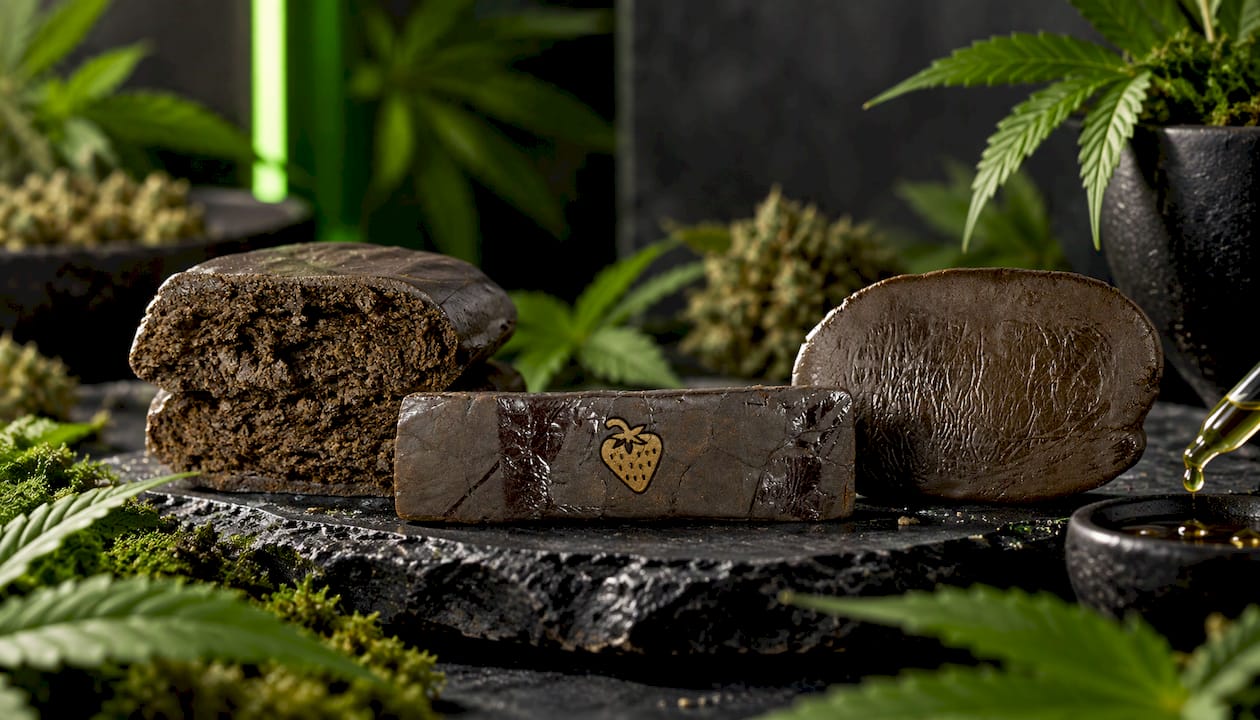
If you want to put this into practice, start with the aroma you are drawn to and browse from there. Our cannabis flower and pre-rolls range from budget to AAAA, so you can compare how different grades smell and look. Prefer resin-forward products? See our concentrates, including hash, live resin, shatter and diamonds.
We deliver discreetly across Canada, and orders over $200 ship free. If you are new to this, our vapes and edibles offer gentler ways to explore flavor, and our team stands behind a satisfaction guarantee. Prefer to learn more first? Our guide to cannabis and CBD differences and our article on cannabis and relaxation cover the next questions most readers ask. The Chrono serves adults of legal age in Canada.
FAQ
What are terpenes in weed?
Terpenes are natural aromatic compounds that give cannabis its smell and taste, and they also appear in plants like citrus and pine. More than 100 have been identified in cannabis. They are made in the trichomes alongside cannabinoids like THC and CBD.
What are trichomes on cannabis flower?
Trichomes are the sticky, translucent glands that frost the buds. They contain resin glands that make terpenes and hold cannabinoids such as THCA and CBDA. They are concentrated on the calyces and bracts, with fewer on leaves and stems.
Which terpene makes you feel the most high?
No terpene has been shown to do that. THC drives intoxication, and terpenes may modify the experience, but human evidence is limited. A 2025 trial found that adding alpha-pinene to THC did not reduce THC-related memory impairment.
Does a higher terpene percentage mean stronger smell?
Not reliably. A 2025 sensory study found that total terpene concentration did not track how often aroma attributes were reported. Smell the flower when you can, and use the percentage as one clue among several.
Do terpenes work the same in edibles as in flower?
Likely not. Volatile terpenes are easily metabolized when eaten, and a comprehensive review notes that oral consumption typically leaves minimal levels. In edibles, flavor comes mostly from the recipe itself.
Sources
- Cannabis Basics, Cannabis Evidence
- The Cannabis Terpenes, PMC (2020)
- Cannabis Glandular Trichomes, Frontiers in Plant Science (2021)
- Terpenes in Cannabis: Solving the Puzzle, PMC (2020)
- Cannabis glandular trichomes alter morphology, The Plant Journal (2019)
- Exploring Aroma and Flavor Diversity in Cannabis sativa, PMC (2025)
- The Entourage Effect in Cannabis Medicinal Products, comprehensive review
- How Terpenes Affect Your Cannabis Experience, New Jersey Cannabis Regulatory Commission
- Alpha-pinene and delta-9-THC clinical trial, PMC (2025)
- Cannabis terpenes and cannabimimetic activity, Scientific Reports (2021)
- Cannabis Terpenes: What They Are and How They Work, Healthline
- Beyond potency: A proposed lexicon for sensory evaluation of cannabis, PMC (2025)
Recommended
- Your handy guide to understanding trichomes
- What are the best terpenes to reduce anxiety?
- Indica vs. Sativa: How do these cannabis types differentiate?
- What’s the Difference Between THC and CBD?