

Educational
Fruit Loops Strain: Genetics, Flavor, Effects and THC

Nov
Fruit Loops is a fruity, citrus-and-berry hybrid that is usually traced to Blueberry, Grapefruit, White Widow and Blue Dream. Most sources put its THC at roughly 18% to 25%. People describe it as relaxed, happy and uplifted, with dry mouth and dry eyes as the most common complaints. Sources disagree on whether it leans indica or sativa, and that disagreement says something useful about how to shop for any strain.
This guide covers the lineage, the look and flavor, the potency range, the reported effects and a practical way to choose a jar that matches what you want.
TL;DR
- Fruit Loops is a hybrid most often described as a cross of Blueberry, Grapefruit, White Widow and Blue Dream, with no single breeder credited.
- Reported THC runs from about 18% to 25%, with CBD usually under 1%.
- Expect a sweet berry-and-citrus nose, frosty buds with orange hairs, and a relaxed, upbeat effect.
- Indica or sativa labels vary by source, so judge a product by its lab results and terpene profile, not the name alone.
- Start low, go slow, and never drive after using cannabis.
Table of Contents
- What is the Fruit Loops strain?
- What does Fruit Loops look, smell and taste like?
- How strong is Fruit Loops?
- What effects do people report?
- Why descriptions of the same strain disagree
- Our perspective
- How to choose a Fruit Loops-style flower
- Fruit Loops growing notes
- Legal and safety basics
- Shop flower with a sweet, fruity profile
- FAQ
- Sources
What is the Fruit Loops strain?
Fruit Loops (also written Froot Loops, Fruity Loops or just Loops) is a hybrid named for the cereal it smells like. Strain Link describes it as a hybrid bred from Blueberry, Grapefruit, White Widow and Blue Dream, with lab tests averaging around 18.7% THC across 28 results. Other write-ups list the same ingredients in slightly different combinations: one lists Blue Dream, White Widow and Grapefruit as the cross, another lists White Widow, Blueberry and Grapefruit as the reported parents.
The common thread is a fruity, resinous, Haze-and-Widow-flavored hybrid. No major breeder has claimed it, so seeds are not commercially available and growers work from clones of mature plants. That is also why you will see lookalike names. A separate listing, Fruity Oop!, is described as a blend of Grapefruit, Blueberry and White Widow, and FL OG is a different cross altogether, bred from Irene OG and Face Off OG. Same cereal-aisle theme, different plants.
Indica or sativa?
The answer depends on who you ask:
| Source | Reported balance | Reported THC |
|---|---|---|
| LeafWell | 55% indica, 45% sativa | 18% to 22% |
| CertAMD | About 70% sativa, 30% indica | 18% to 25% |
| Cannapedia | 55% indica, 45% sativa | 16% to 24% |
| Leafist | Not stated | 20% to 25% |
A balanced hybrid is a fair summary. If you want to understand what those labels do and do not tell you, our piece on indica vs. sativa goes through it.
What does Fruit Loops look, smell and taste like?
The cereal comparison is mostly about aroma. The look is more understated.
Appearance. Descriptions of the buds range from light to olive green with flashes of blue and purple, neon-orange hairs and chunky, frosty trichomes. Another source describes medium-dense, compact nugs with lime to forest greens and occasional lavender. One reviewer called the flower fairly unassuming, with a healthy green and little purple. Expect variation from grower to grower.
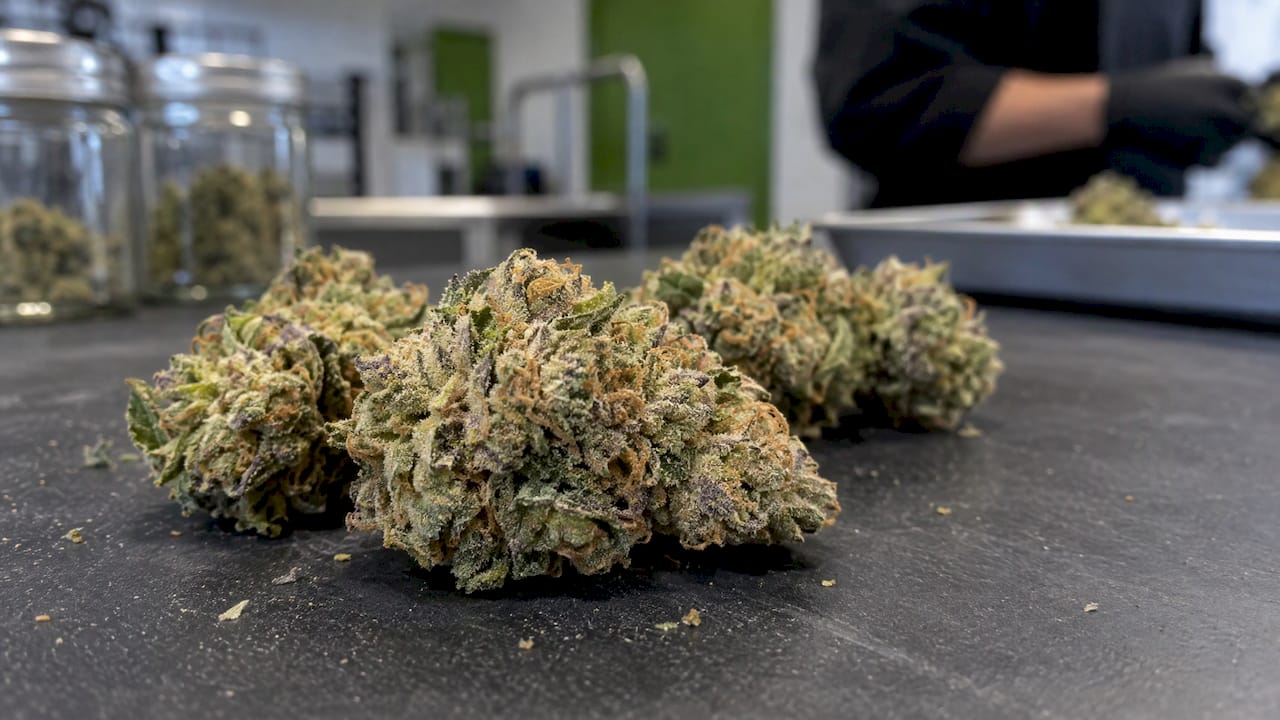
Aroma and flavor. The profile is sweet, berry and citrus. Reports mention blueberry and citrus followed by a skunky, tropical finish, and a burst of citrus on the inhale with a lingering sweetness on the exhale. Another reviewer noted a muted nose of fresh citrus, mango and pink guava rather than a full lemon-haze blast.
Terpenes. Lists differ, but limonene (citrus) and myrcene (earthy, fruity) show up almost everywhere. CertAMD adds terpinolene, while Cannapedia lists myrcene at 1.4%, pinene at 0.7%, caryophyllene at 0.6%, limonene at 0.3% and linalool at 0.1%. Treat those as one sample, not a fixed recipe. Terpene content moves with cultivation, curing and storage.
How strong is Fruit Loops?
Fruit Loops sits in the moderate-to-high range. Licensed labs in legal markets often place total THC around 18% to 24%, with standout batches occasionally above 25% and CBD typically below 1%. Strain Link’s lab results span a wider band, from 13.9% to 26.7%.
What that means in practice:
- A jar labeled 18% and one labeled 25% will feel different, even under the same name.
- If you are new to cannabis, aim for the lower end and take a small amount first.
- Percentages describe the flower, not your experience. Tolerance, setting and method matter as much.
If you want to understand the two main cannabinoids behind these numbers, see the difference between CBD and THC.
What effects do people report?
The most common description is relaxed, happy and uplifted. Strain Link lists dry mouth and dry eyes as the most reported downsides. CertAMD also lists paranoia among adverse effects, and notes the strain is commonly used for stress, mood and mild pain. These are user reports, not medical claims, and nothing here replaces advice from your doctor.
One write-up describes two expressions of the plant: a “Citrus Zest” type with a more alert daytime feel and a “Berry Cream” type with a softer, more relaxing finish. That fits a hybrid with limonene on one side and myrcene on the other.
Timing by method
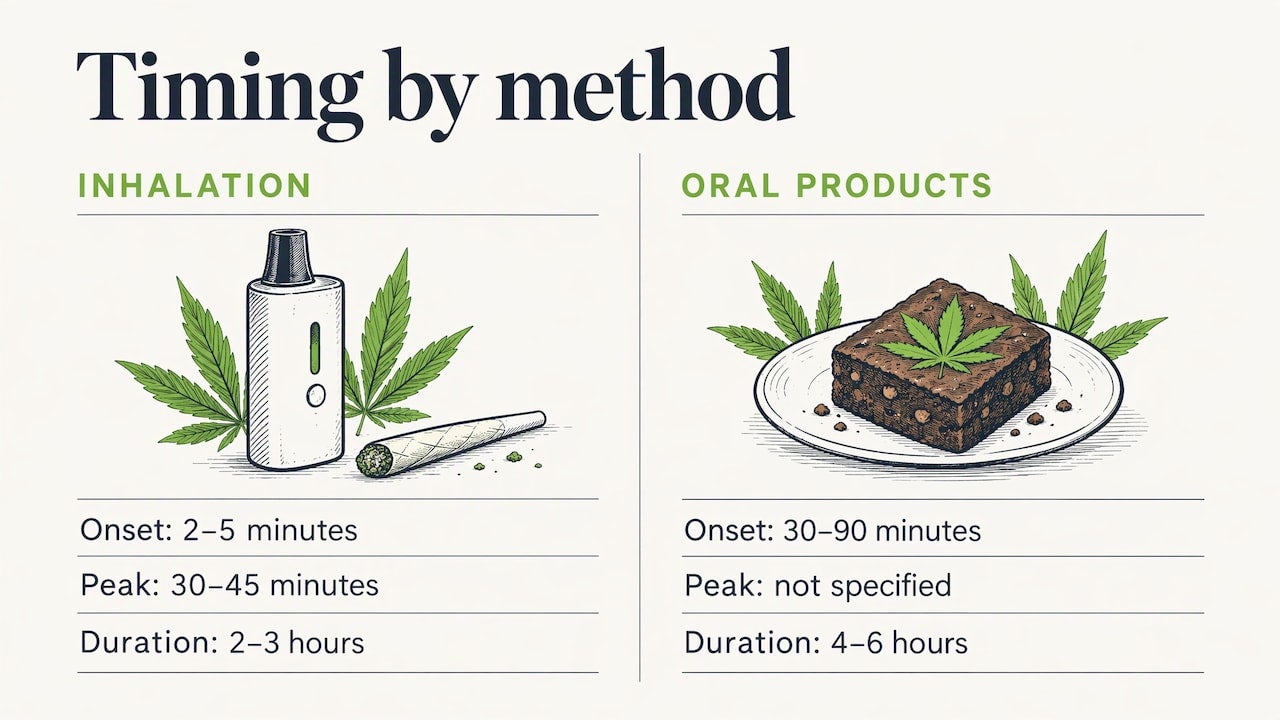
For inhalation, a single small joint or a few vaporizer pulls commonly produce noticeable effects within 2 to 5 minutes, peaking around 30 to 45 minutes and fading over 2 to 3 hours. Oral products take longer: onset of 30 to 90 minutes and a duration of 4 to 6 hours. Do not stack a second dose of an edible because the first one feels slow.
Why descriptions of the same strain disagree
If the lineage and effects above sound inconsistent, that is not unique to Fruit Loops. A peer-reviewed study in PMC found no clear genetic support for the Sativa, Indica and Hybrid types as described in online databases, and noticeable genetic differences between samples sold under the same strain name. The authors also point out that the industry has no standard way to verify strains, so buyers rely on the label matching the contents.
The practical advice from RethinkTHC is sensible: look at lab testing results rather than the name, and if you find a product that works for you, buy from the same source again, since names are more reliable within one grower than across the industry.
In short, use the strain name as a starting point and these as the real decision tools:
- THC and CBD percentages from the product page or lab report.
- Terpene information, where listed. Limonene-forward tends to read brighter, myrcene-forward softer.
- Grade and bud quality: dense, frosty, fragrant flower that has been properly cured.
- Your own notes: write down what you bought, how much you used and how you felt.
Our perspective
We see the Fruit Loops question every week: people want the flavor of the name and the mood they have read about. Our view is that the fastest way to get both is to shop by profile, not by label alone.
That is why we curate our flower range by grade, from AAAA through budget, and sort it so that a first-time buyer and a seasoned user can both find something that fits. If you like a sweet, citrus-and-berry hybrid, look for flower with a fruity terpene profile and a THC range that suits your tolerance. Our catalog also includes edibles, concentrates and vapes for those who want a similar flavor direction in a different format.
We source from leading Canadian suppliers, and our process is built around inspections intended to keep quality high. We offer affordable pricing and a satisfaction guarantee, so exploring a new profile is not a big gamble.
the author
How to choose a Fruit Loops-style flower
Whether you find the exact strain or a close cousin, a few habits help.
Match the grade to your budget. Our flower range runs from budget through AA, AAA and AAAA. Higher grades usually mean denser buds and more aroma, but a budget grade can be a sensible way to learn which profile you enjoy.
Read the profile, not just the name. Citrus, berry, tropical and sweet are your keywords. If the listing mentions limonene and myrcene, you are in the right neighborhood.
Choose a format that suits you. Flower is the classic route. If you prefer not to smoke, there are other ways to enjoy cannabis without smoking it, and our edibles dosage guide helps with portions. Curious about extracts? Here are five differences between flower and concentrates.
Time of day. Reports of a bright, uplifting side suggest daytime or early evening for citrus-leaning batches, and a calmer finish for berry-leaning ones. If sleep is your goal, see our notes on strains for a good night’s sleep.
Keep exploring. Part of the fun is comparing profiles. We wrote about why it pays to explore different strains for exactly this reason.
Fruit Loops growing notes
Home growing rules differ by place, so check yours first. Where it is allowed, SunWest Genetics reports medium heights of 5 to 8 feet, a flowering time of 7 to 10 weeks and an outdoor harvest from late September to late October. Another grower page reports 10 to 12 ounces per square meter indoors. Since the strain is clone-only, the quality of the cutting matters more than almost anything else.
Legal and safety basics
Cannabis law depends on where you are. In Canada, provinces and territories decide how cannabis is sold and who can sell it, and they can set a higher minimum age, lower possession limits and restrictions on public use. Check your own province’s rules before ordering. Readers elsewhere should check their local law, as cannabis remains regulated differently across states and countries.
When you use it, keep these in mind:
- Driving. The CDC notes that marijuana can slow reaction time, impair coordination and distort perception, and that driving under the influence of drugs is dangerous and illegal. Do not drive after using.
- Start low. Especially with edibles, wait the full onset window before taking more.
- Medications and conditions. If you take prescription medication, are pregnant or have a heart, mental health or other medical condition, speak to your doctor or pharmacist before using cannabis. Our health considerations page has more.
- Storage. Keep all products sealed and out of reach of children and pets.
Shop flower with a sweet, fruity profile
If the Fruit Loops flavor appeals to you, our cannabis flower and pre-rolls range is the place to start. You will find AAAA, AAA, AA and budget grades, plus mix-and-match bundles, discreet delivery across Canada, free shipping on orders over $200 and a satisfaction guarantee.

Prefer something other than flower? Browse our edibles, vapes and concentrates for fruity options in other formats.
FAQ
Is Fruit Loops indica or sativa?
Sources disagree. Some describe it as roughly 55% indica and 45% sativa, others as about 70% sativa. Genetic research shows these labels are an unreliable guide to effects, so read the product’s THC and terpene information instead.
How much THC does Fruit Loops have?
Most reports fall between about 18% and 25% THC, with CBD typically under 1%. Individual batches vary, so check the listing for the exact figure on what you are buying.
What does Fruit Loops taste like?
Expect sweet berry and citrus, sometimes with tropical notes like mango or guava and a slightly skunky finish. Intensity varies from batch to batch, depending on cultivation and curing.
Can I grow Fruit Loops from seed?
Not reliably. No major breeder has claimed it, so seeds are not commercially available and growers use clones. Check your local laws before growing at home.
Sources
- Strain Link: Fruit Loops
- CertAMD: Fruit Loops overview
- LeafWell: Fruit Loops
- Leafist: Fruit Loops lineage
- Cannapedia: Fruit Loops
- thcfarmer: Fruit Loops
- The Leaf Index: Fruit Loops
- HallowedGram: Fruit Loops review
- CannaRadar: Fruit Loops
- JointCommerce: Fruit Loops guide
- PMC: Genetic tools and strain reliability
- RethinkTHC: Strain names
- SunWest Genetics: Fruit Loops
- NYSOHigh: Fruit Loops
- Health Canada: Authorized cannabis retailers
- CDC: Marijuana use and driving
Recommended
- Hiking High – Best Pot Strains for Hiking
- 5 Differences Between Weed Flowers Vs Concentrates
- Indica vs. Sativa: How do these cannabis types differentiate?
- Weed for Sleep | Best Strains for Good Night’s Sleep